
From "User" to "Executive": How We Operationalized AI at the January Workshop
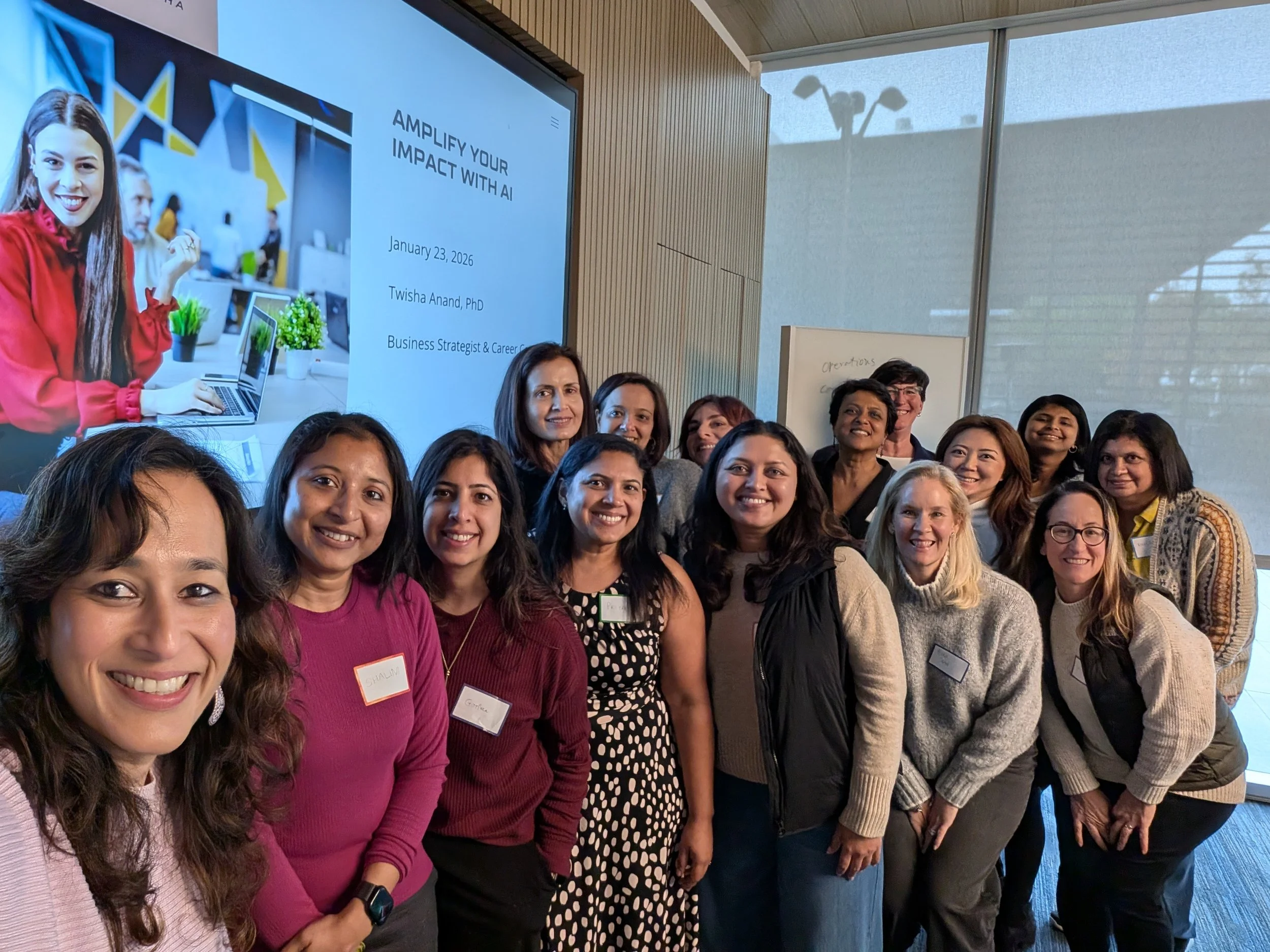
Last Friday in San Carlos, a curated group of founders, business owners, and professionals gathered for a specific mission: to stop treating AI like a novelty and start treating it like a "Chief of Staff".
In my work with organizations and C-suite leaders, I see a consistent pattern: high-performers are drowning in "invisible labor." They are stuck in the weeds of admin, scheduling, and drafting, leaving them little bandwidth for high-level strategy.
The "Amplify Your Impact" workshop was designed to solve this—not by teaching people how to "chat" with a bot, but by teaching them how to manage a digital workforce .
Here are the key takeaways from our session on operationalizing AI for leadership.
1. The Mindset Shift: From "Friend" to "Intern"
One of the first barriers we dismantled was the casual approach to AI. Many users treat LLMs (Large Language Models) like a search engine or a conversational friend.
To get executive-level results, you must adopt a Managerial Mindset.
We discussed the distinction between LLMs (which generate content/ideas) and Agents (which execute tasks). While Agents are the future of operational relief, today's leaders can get massive leverage simply by treating current tools as capable but inexperienced interns. If the output is poor, the fault often lies in the lack of context provided by the manager.
2. The Framework: Context is Queen
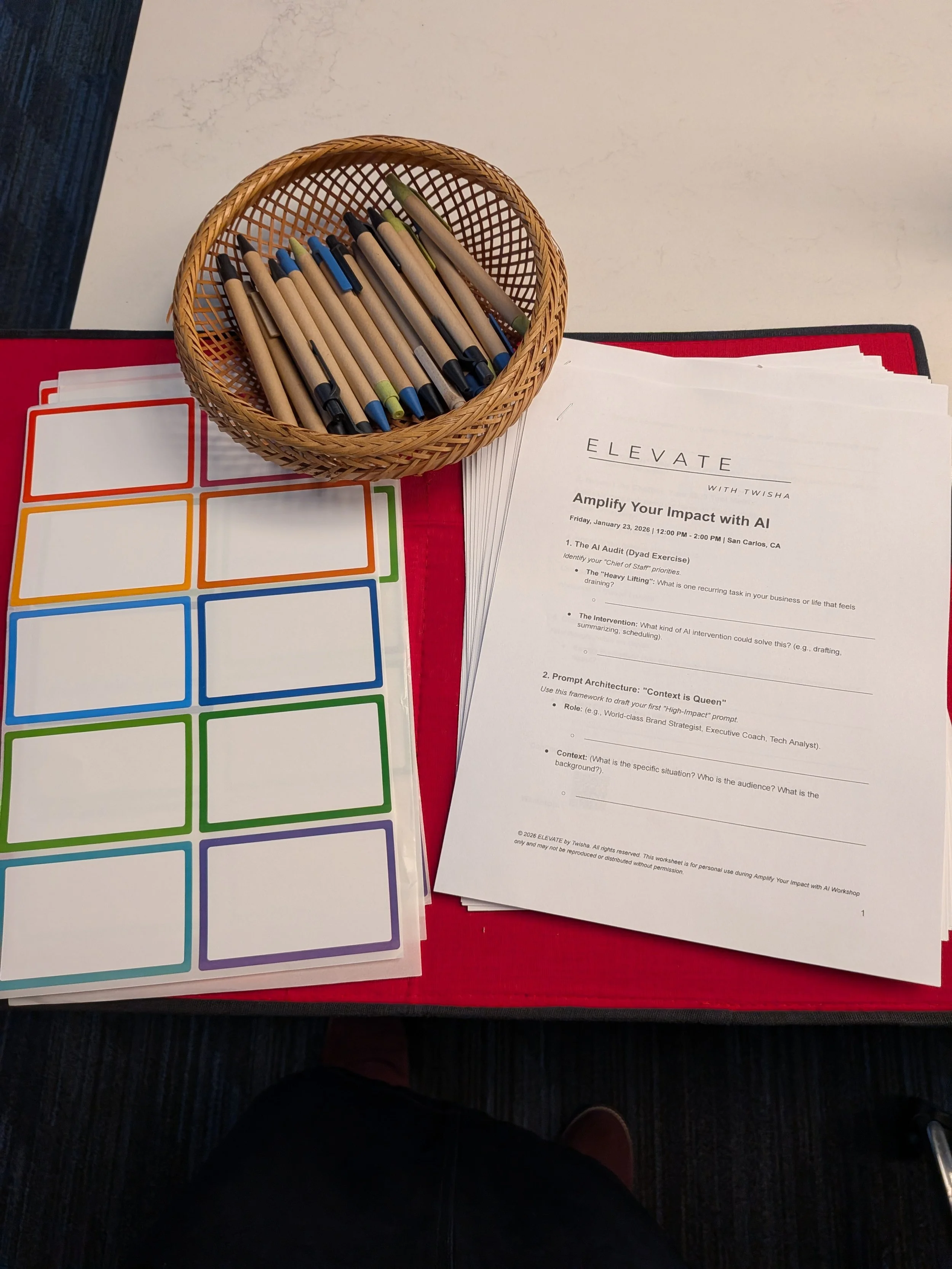
We moved beyond generic prompting to a structured "Prompt Architecture" designed for business results.
In corporate environments, ambiguity kills efficiency. The same applies to AI. We used a specific formula to drive high-quality output:
Role: Assign a persona (e.g., "Act as a World-Class Brand Strategist" or "Executive Coach").
Context: Provide the deep background—who are you, what is the numeric data, and what are the stakes?.
Audience: Define exactly who is reading (e.g., "Skeptical investors" vs. "Local residents").
Constraints: Set negative constraints. We explicitly banned AI clichés like "unlocking potential" or "game-changer" to ensure the tone remained sophisticated and authentic.
The "Ask Me" Loop: The most critical step we practiced was the feedback loop. Instead of demanding an immediate draft, we instructed participants to end their prompts with: "Before you write, ask me 3 clarifying questions about my specific methodology.".
This simple addition transforms the AI from a guesser into a strategic partner.
3. Real-World Application: Business Case Studies
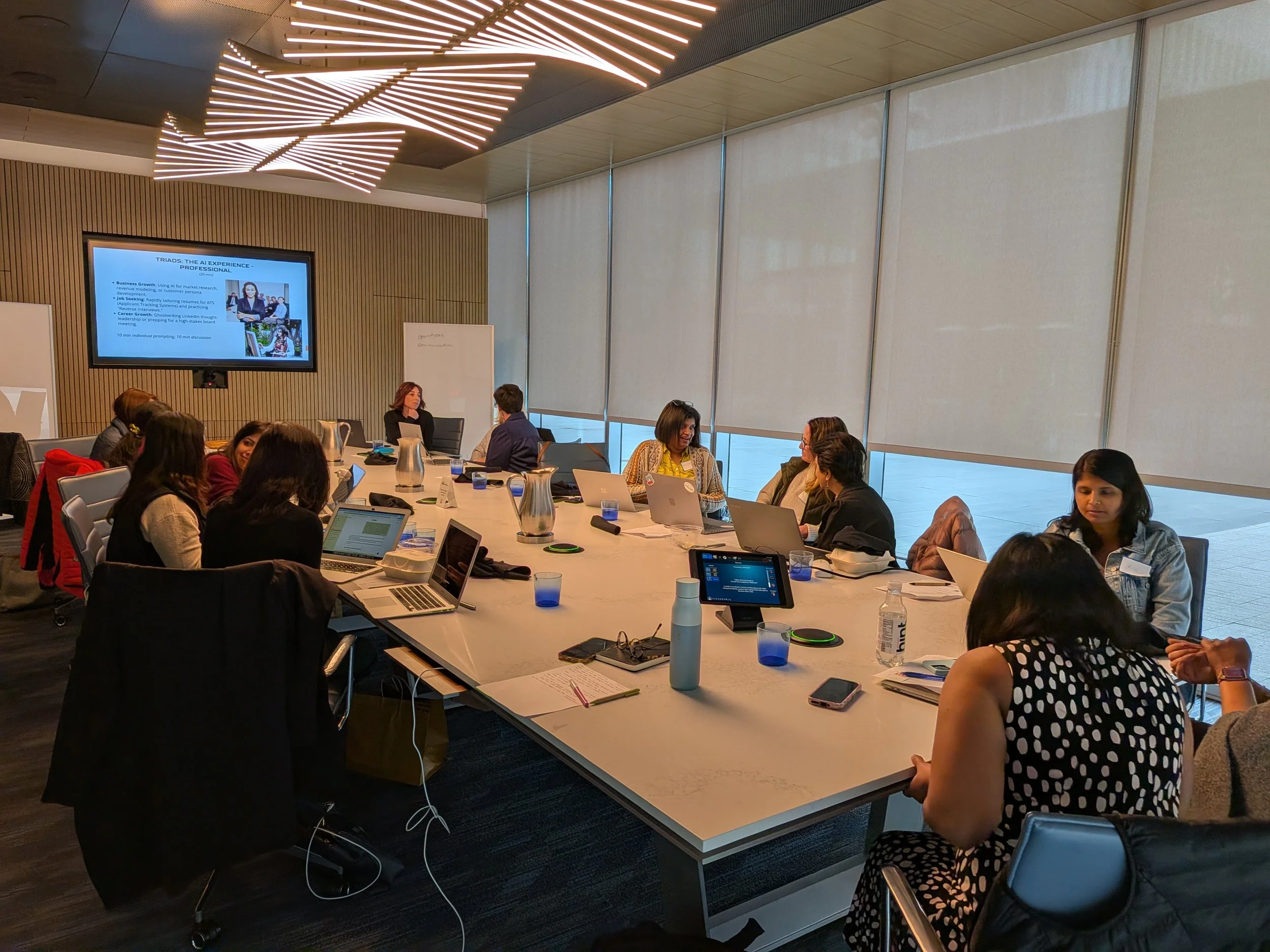
This wasn't theoretical. Participants applied this framework live to their actual business operations, seeing immediate improvements in clarity and tone:
Restaurant Operations: A local business owner transformed a generic operations notice about new Monday hours into a narrative-driven post. By positioning her venue as a solution for busy families escaping the "meal-prep trap" after weekend trips, she turned an admin update into a value proposition.
Real Estate Strategy: An agent shifted from a standard "Just Sold" post to a trust-building narrative. By highlighting her specific community involvement (School Board, PTA), she appealed directly to families and adult children managing inherited homes—building trust rather than just broadcasting sales.
Winery Business: A business owner used specific persona prompting ("read this like a wine-savvy young couple from Boston") to get a critique on her product descriptions. The AI identified critical gaps in her data, asking specifically what "small batch" meant quantitatively, pushing for a more rigorous business description.
4. The 2026 Tool Matrix
Finally, we looked at the "Tech Stack" for modern leadership. Relying solely on ChatGPT is no longer sufficient. We explored a matrix of tools for specific executive functions:
For Strategic Search: Perplexity—to provide curated, sourced answers rather than a list of blue links.
For Meeting Presence: Granola / Otter—automated note-taking that allows leaders to remain fully present in the room rather than scribbling minutes.
For Executive Documents: NotebookLLM—allowing us to upload private data locally to critique resumes or reports against "senior executive" standards.
For Intelligent Scheduling: Reclaim AI—to protect time for deep work.
The Bottom Line for Organizations
The goal of this workshop was not just "productivity"—it was capacity.
When leaders reclaim 10 hours a week from admin work, they don't just "do more work." They regain the space to mentor their teams, think strategically, and drive the business forward.
Is your team operating at full capacity? If you are interested in bringing this "AI for Executive Workflow" training to your organization or leadership team, let's connect. We can customize this curriculum to help your managers transition from "overwhelmed" to "optimized."
Inquire about Team Training & Workshops