

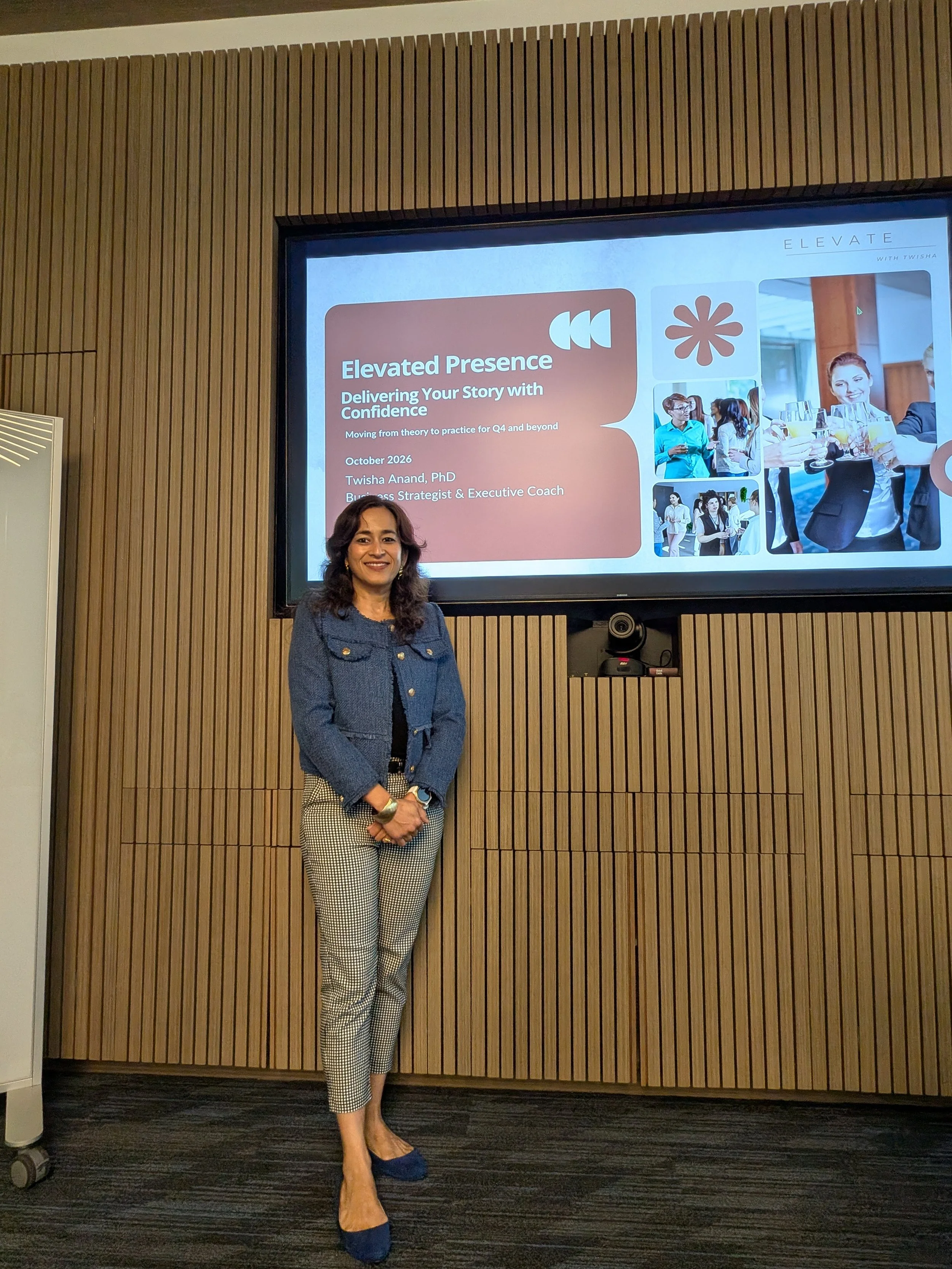
At our October 2026 Elevate Gather in San Carlos, we tackled a common hurdle for business leaders. Many professionals write excellent pitches but struggle to deliver them effectively at real-world events. To address this gap, our workshop focused on delivery and action over theory.
Here are the core takeaways from our session on how to walk into any room and make a lasting impact.
Adapt to the Room: Social vs. Professional Events
Your networking approach must change based on your environment.
Social Mixers: Lead the conversation with curiosity, connection, and care.
Professional Events: Lead with expertise, value, and presence to ensure high recall.
The Buy-In Formula
Securing a listener's attention relies on a simple equation of perceived value divided by cognitive effort. Higher value combined with lower complexity results in greater buy-in, leading to meaningful follow-ups and referrals.
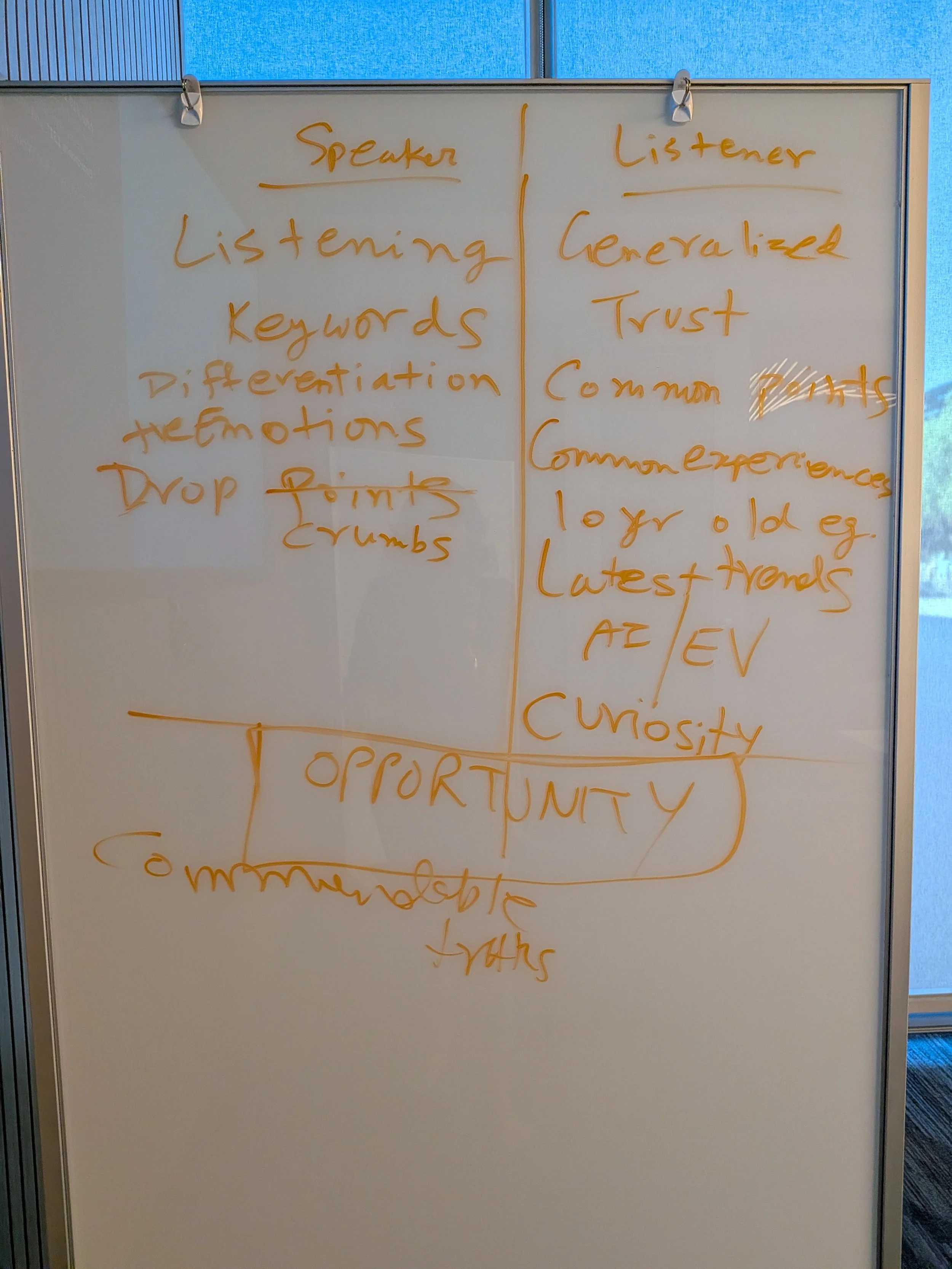
To reduce cognitive load for your listener, avoid jargon, complexity, and title-first introductions. Instead, run your pitch through the 10-year-old test. If a child can understand your highly specialized role, anyone in the room can. Drop your company name later in the conversation as a credibility crumb rather than using it as your opening line.

Crafting and Delivering Your Hook
A successful conversational hook relies on three components: who you help, how you help them, and the ultimate outcome.
Seek Relevance: Tailor your hook to the specific person standing in front of you. What you do does not change, but how you say it should.
Share Commendable Truths: State your real achievements out loud and weave them organically into the conversation and they will not come across as bragging.
Pacing and Pauses: Speak slower than feels natural because listeners absorb information at a different pace. Use calculated pauses during high-tension moments in a story. Nobody will interrupt you when they are waiting to hear what happens next.
Drop Crumbs: Share small personal facts about your location or interests to create familiarity and build common ground fast.
The Mechanics of the Room
Entering: Before arriving, check the guest list and LinkedIn to know who you want to meet. Going in prepared is especially valuable for introverts. Once inside, scan for friendly smiles and eye contact. Look for people who share your background, or find someone standing alone because loneliness seeks loneliness. You can also wear a bold accessory to serve as a built-in conversation starter.
The Three A's of Presence: Focus on your Attire, Attitude, and Assurance. It is better to be overdressed, as being underdressed signals that you are unprepared. Take up physical space, stand tall, and use your voice assertively with sustained eye contact.
Exiting: End conversations with an offer, an ask, or both. Use a one-point close like a LinkedIn connection request or a quick email exchange. If you need a polite exit, excuse yourself for a food refill, a bathroom break, or to meet other attendees.
See Every Interaction as an Opportunity
You can help someone, they can help you, or you can connect two people who do not know each other. As Simon Sinek notes, leaders are known not by the size of their network but by the networks they create.
Ultimately, confidence in your external communication emerges from being confident within. And to be confident within, you need to know who you are. You cannot confidently project a narrative you have not fully explored and owned.
If you are interested in knowing who you are, diving deep into your professional identity, and uncovering your core strengths, book a call with me.