
The Machinery of Change: What History Teaches Us About Navigating the Tech Restructuring Wave

The corporate platitudes flooding our feeds today are entirely missing the point.
In the wake of recent announcements—with Meta cutting 8,000 roles and Intuit executing a sudden 17% workforce reduction—the standard advice is a chorus of defensive comforting: “It’s not you, it’s the macroeconomy.”
But that comfort fails to ring true because it ignores what your intuition already knows: This is not a financial crisis. It is a capital reallocation. Meta and Intuit didn't downsize because they are losing money; they are reporting massive, record-breaking revenue quarters. They are trimming headcount because they have made a deliberate, calculated bet: they are reallocating billions of dollars away from human payroll and directly into AI infrastructure, compute power, and autonomous agent pods.
It is entirely natural to feel angry or disoriented by this shift. It is valid to look at highly profitable enterprises diverting capital from human talent to train an automated replacement and see an existential threat. But to understand what to do next, we have to step away from the immediate shock and look at the broader arc of our economic history.
This is not the first time capital has chosen technology over human labor. History shows us that these moments are not the end of professional utility—they are the painful rewriting of how value is calculated.
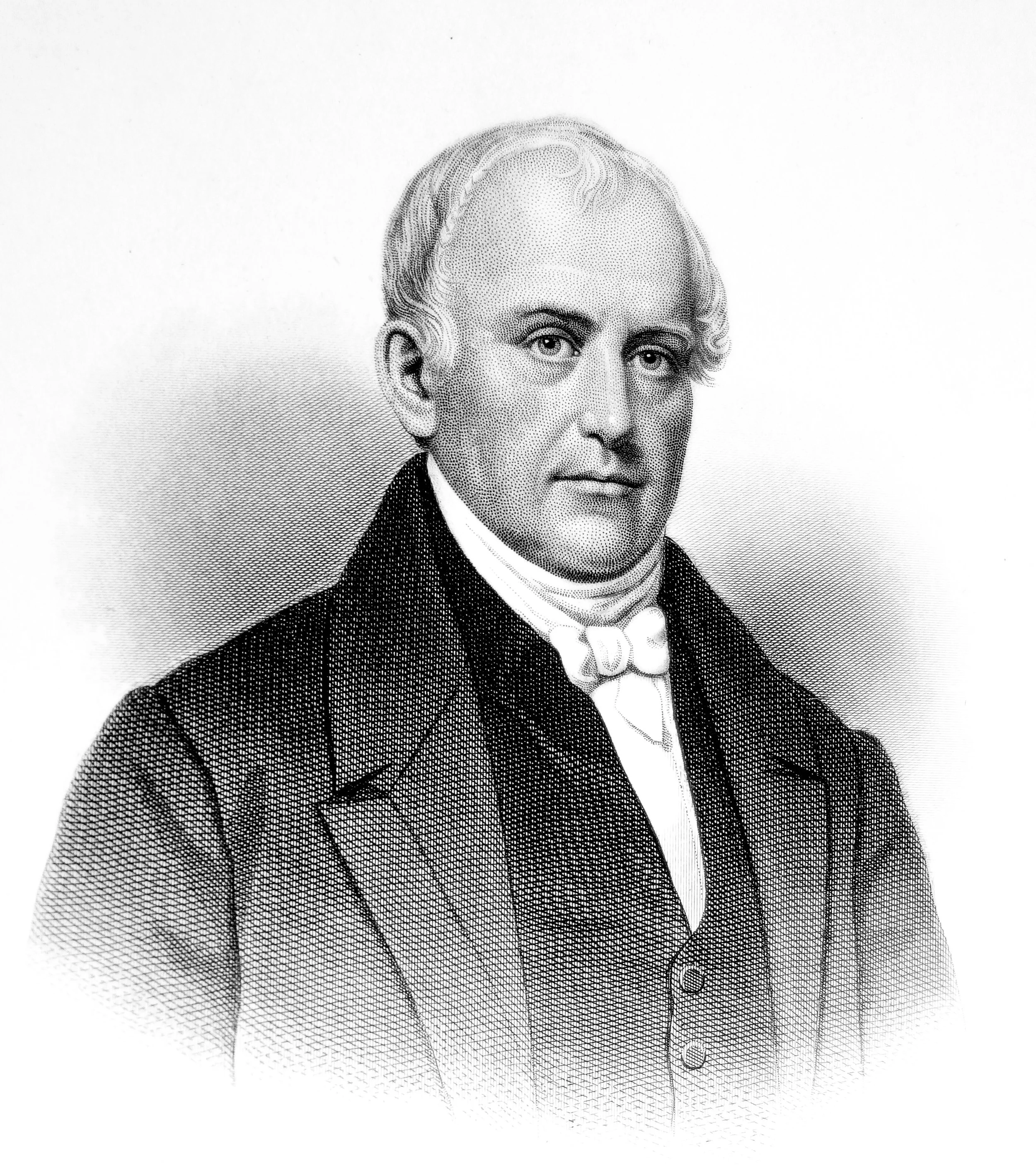
National Biographical Publishing Company, Public domain, via Wikimedia Commons
The Lessons of History 1: Samuel Slater and the First Industrial Disruption
When we look back at the great turning points of economic history, the anxiety we are experiencing this week is a familiar story.
In the late eighteenth century, the Industrial Revolution fundamentally altered the fabric of labor. For generations, highly skilled, independent master weavers controlled textile production. They owned their tools, set their own pace, and commanded premium trade value.
Enter Samuel Slater, the man President Andrew Jackson later dubbed the "Father of the American Industrial Revolution."
Slater did not invent the textile machinery; he memorized the tightly guarded designs of British water-frame spinners as an apprentice and brought that intellectual property to Rhode Island in 1789. By building the first efficient, water-powered spinning mills in America, Slater introduced the "Rhode Island System of Manufacture."
This structural shift automated massive segments of manual production. Suddenly, independent weavers faced staggering, overnight obsolescence. The automated water frame was faster, cheaper, and tireless. Capital rushed away from the artisan workshops and directly into mill infrastructure.
The masters who survived and ultimately thrived were not those who tried to out-weave the water frame. Instead, they recognized that the nature of leverage had shifted. They realized that value had migrated from the manual execution of spinning thread to a new domain: designing complex operational workflows, managing the factory floor, and securing the raw supply chain. They stopped competing with the machine's output and started managing the system around it.
The Lessons of History 2: Marc Andreessen and the Post-Netscape Cloud Pivot

JD Lasica, CC BY 2.0 <https://creativecommons.org/licenses/by/2.0>, via Wikimedia Commons
A identical capital reallocation transformation occurred during the dot-com crash of 2000.
In the mid-1990s, Marc Andreessen famously brought the internet to mainstream America by co-founding Netscape, the first widely successful commercial web browser. Netscape’s 1995 IPO ignited the first great tech boom. But by the late 1990s, Microsoft began bundling Internet Explorer with Windows, effectively cutting off Netscape’s air supply and crushing its browser market share. When AOL acquired the remains of Netscape and the broader dot-com bubble burst, thousands of traditional internet pioneers, digital coordinators, and print-based marketing specialists were discarded almost overnight.
The capital did not vanish; it was redirected to fund a deeper layer of the digital environment.
Andreessen didn't waste time trying to build another front-end desktop browser to win yesterday's desktop war. He looked at the wreckage and realized that as the internet matured, the real market friction was no longer how people viewed web pages, but how businesses managed the backend servers running those pages.
In late 1999, alongside Ben Horowitz, he co-founded Loudcloud (later reinvented as Opsware). They pioneered the space we now know as cloud infrastructure and Software-as-a-Service (SaaS), automating web-hosting deployment and server configuration. Instead of fighting the browser collapse, Andreessen used the newly laid internet cables as an operational floor to build back-end automation software, eventually selling Opsware to Hewlett-Packard for $1.6 billion.
The economy did not run out of tech work. It redefined where the value lived. The professionals who successfully pivoted did not compete with the automated internet infrastructure; they used it to scale global logistics, manage complex databases, and pioneer data-driven corporate roles that could not have existed a decade prior.
The Reality: "Now What?" and "So What?"
Today, the tech sector is funding its $100B+ AI infrastructure bets by aggressively flattening its hierarchies. The middle management, project management, and business operations tiers are being reduced because automated workflows can handle the basic coordination work that humans used to do.
The shock you are feeling is the realization that legacy dedication to an organizational chart no longer guarantees a safe harbor when a company decides to fund an LLM integration by cutting your department. If you were notified in a 4:00 AM email that your role was gone, your immediate mandate is not to rush out and fix your resume to apply for the exact same position at a competitor. That approach simply steps back into the path of the same capital shift.
To ensure your market readiness in this new era, you must answer two critical questions:
The Now What: Where do you fit into the technology ecosystem? If your core day-to-day value was generating standard templates, organizing basic meetings, or moving data from point A to point B, that role is being defunded to buy GPUs. You must explicitly find your place above the execution layer. Your value lies in managing the behavioral context, defining the overarching narratives, and directing the human judgment that the technology requires to be effective.
The So What: If you don't know where you fit yet, recalibrate immediately. Most job seekers are being told to "activate a network" by blasting generic LinkedIn messages to every connection they have. This is vanilla, exhausting, and ineffective.
Your Focused Action Item: The Information Audit Sprint
Instead of asking people for a job or a coffee chat, identify three professionals who are already successfully running small autonomous teams, leading lean organizations, or consulting in your target sector. Reach out with a sharp, specific query:
"I am auditing how senior roles are shifting in light of the recent Meta and Intuit capital reallocations. I see how you are currently structuring workflows using automated tools as operational scaffolding. Can I get 15 minutes to learn how you are balancing human judgment with these new tools?"
You are not looking for a job referral yet; you are hunting for market data. Learn what systems they are using, find out where their current workflows break down, and discover what human interventions they still rely on.
Use those insights to recalibrate your professional profile. Once you map where the automated scaffolding ends and where high-level human leadership begins, you can rewrite your professional narrative to position yourself as an indispensable builder of the new economy.

Calibrate Your Next Move
When the macro foundations shift, looking at the data alone isn't enough—you need an execution framework tailored to your specific background. If you are ready to stop navigating these massive workplace changes in isolation and want to deliberately re-engineer your professional trajectory, let's align your next step.
Book your strategy call here to build your market readiness engine: